
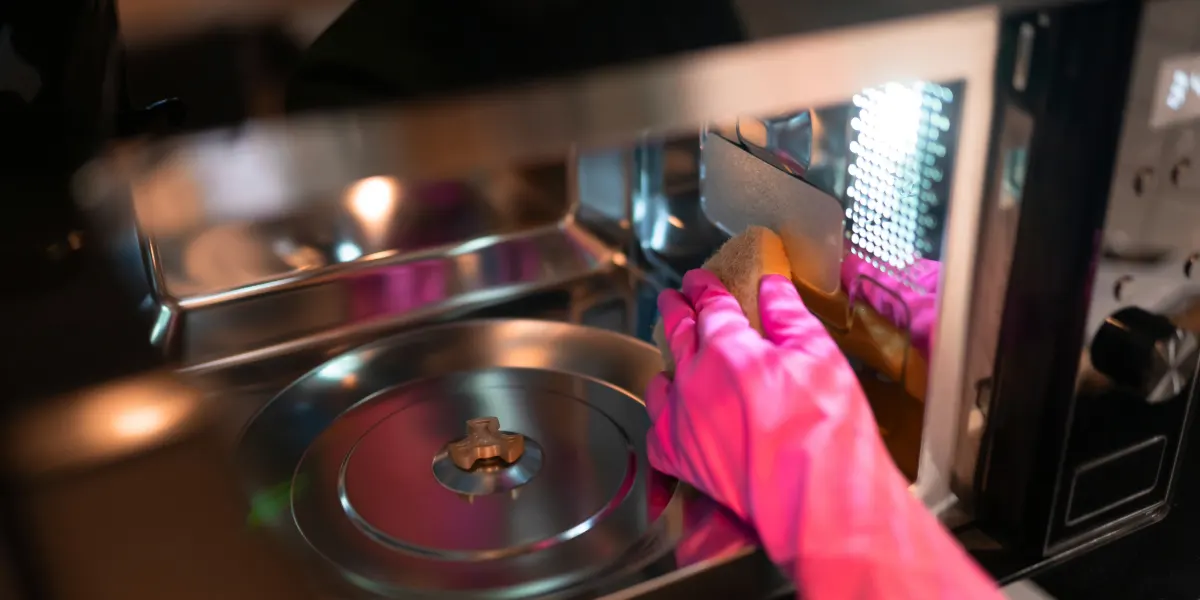
This microwave cleaning guide explains everything you need to know about microwave ovens, how they work, why regular cleaning matters, and the safest ways to keep them clean and hygienic. Microwaves are one of the most frequently used kitchen appliances, and without proper care, food splashes, grease, and steam residue can quickly build up inside.
Following a structured microwave cleaning guide helps improve hygiene, prevent odours, and extend the life of your appliance.
Understanding How a Microwave Oven Works
Microwave ovens heat food using electromagnetic waves that cause water molecules in food to vibrate and generate heat. While this process is fast and efficient, it also means that food splatters and steam are repeatedly reheated, causing residue to harden on interior surfaces.
Key microwave areas that require regular cleaning include:
- Interior walls and ceiling
- Turntable and roller ring
- Door glass and rubber seals
- Control panel and exterior casing
Ignoring these areas can affect both performance and food safety.
Why This Microwave Cleaning Guide Is Important
Hygiene and Food Safety
Food particles left inside a microwave can harbour bacteria and mould. Reheating food in an unclean microwave increases the risk of contamination and unpleasant smells.
Performance and Efficiency
Grease and residue interfere with heat circulation, causing uneven heating and longer cooking times. A clean microwave heats food more evenly and efficiently.
Appliance Longevity
Regular cleaning protects interior coatings, door seals, and moving components, helping to extend the lifespan of the microwave.
Tools Recommended in This Microwave Cleaning Guide
You don’t need expensive products to follow this microwave cleaning guide. Most cleaning can be done with simple household items:
- Microwave-safe bowl
- Water
- White vinegar or fresh lemon
- Baking soda
- Soft cloth or sponge
- Mild dish soap
- Paper towels
- Toothbrush for corners and seals
Avoid abrasive pads or harsh chemicals that can damage the interior coating.
Step-by-Step Microwave Cleaning Guide
Steam Cleaning Method (Best for Routine Cleaning)
This method uses steam to loosen dried food and grease.
Steps:
- Fill a microwave-safe bowl with water and add one tablespoon of white vinegar.
- Heat on high for 5 minutes.
- Leave the door closed for 2–3 minutes to allow steam to work.
- Carefully remove the bowl and wipe the interior with a soft cloth.
Following this microwave cleaning guide weekly prevents heavy buildup.
Lemon Steam Cleaning for Odour Removal
Lemon naturally cuts grease and neutralises smells.
Steps:
- Add lemon juice and lemon halves to a bowl of water.
- Microwave on high for 3 minutes until steam forms.
- Leave the door closed for 5 minutes.
- Wipe clean with a damp cloth.
Microwave Cleaning Guide for Stubborn Stains
For burnt-on food and grease:
- Mix baking soda with water to form a thick paste.
- Apply to stubborn stains and leave for 10 minutes.
- Gently scrub with a toothbrush or sponge.
- Wipe clean with a damp cloth.
Cleaning the Turntable, Door, and Exterior
- Remove the turntable and wash with warm, soapy water
- Clean the roller ring underneath to prevent noise
- Use a vinegar-water solution for the door glass
- Wipe door seals carefully to remove trapped food
- Clean the control panel gently with a damp cloth
Common Microwave Cleaning Mistakes to Avoid
- Using abrasive scrubbers
- Spraying liquid directly onto control panels
- Ignoring door seals and vents
- Letting spills harden over time
Avoiding these mistakes ensures safe and effective cleaning.
When This Microwave Cleaning Guide Isn’t Enough
Some microwaves develop:
- Persistent odours
- Heavy grease buildup
- Interior staining that won’t lift
- Reduced heating performance
At this stage, professional appliance cleaning is often the safest solution.
At Oven Support UK, we provide expert microwave and kitchen appliance cleaning services using eco-friendly, non-toxic products to restore hygiene and performance.
Safety Note on Grease and Fire Risk
According to London Fire Brigade kitchen fire safety guidance , grease buildup in cooking appliances significantly increases the risk of kitchen fires. Regular cleaning is an important preventative measure.Tips to Keep Your Microwave Clean Longer
- Always cover food when heating
- Wipe spills immediately
- Clean weekly using steam
- Ventilate after cleaning
Consistent habits reduce the need for deep cleaning.
Final Thoughts
This microwave cleaning guide shows that regular maintenance is essential for hygiene, efficiency, and safety. Simple steam-cleaning methods work for routine care, while deeper cleaning ensures long-term performance.
Whether you maintain it yourself or rely on professionals, keeping your microwave clean protects your health and appliance investment. With expert support from Oven Support UK, homeowners across the UK can enjoy cleaner, safer kitchens.